Off the Beaten Path: The Barns, Warehouses, and Roadside Rooms That Jam Bands Actually Love
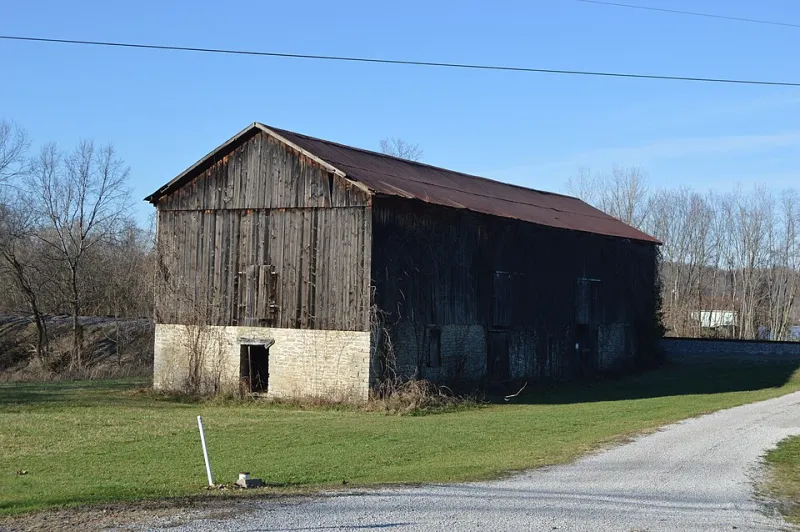
Photo: Nyttend, Public domain, via Wikimedia Commons
There's a moment that every jam band devotee knows. You've followed a hand-drawn map down a gravel road, parked in a field next to a school bus someone clearly lives in, and you're standing in a building that was probably storing hay six months ago — and the music is so good it physically moves you. Not metaphorically. The floor is shaking.
That experience doesn't happen at arenas. It happens in the weird, wonderful, acoustically unpredictable spaces that have become the true home of American jam culture. We went looking for the best of them.
Why Unconventional Venues Work So Well
Before we get to the list, it's worth asking why these spaces produce such memorable shows in the first place. Part of it is practical — lower overhead means more risk-tolerant booking, which means more room for longer sets, more experimental lineups, and more willingness to let a band play until 2am if the room is still alive.
But there's something less tangible happening too. "When you play a conventional venue, there's a script," says Danny, a touring guitarist who's been running the jam circuit for over a decade. "Load in here, sound check there, stage left, stage right, go home. When you play a barn or a warehouse, nothing is predetermined. You have to figure it out together — the band, the promoter, the crowd. That creates a different energy."
Promoter and venue operator Lena, who runs events out of a converted textile mill in western North Carolina, puts it more simply. "The rooms have character. They have history. People can feel that."
With that in mind, here are some of the spaces that musicians and fans keep coming back to.
The Hazel Dell Barn — Rural Indiana
Situated on a working farm about forty minutes outside of Indianapolis, the Hazel Dell Barn has been hosting music since the late 1990s when the property's owner, a lifelong Deadhead, decided his storage barn had better acoustics than any club in town. He wasn't wrong.
The building seats roughly 300, though capacity becomes a flexible concept on big nights. The wooden walls and high ceiling create a natural reverb that musicians describe as both challenging and intoxicating. "You have to play into it," says one touring bassist who's played there three times. "You can't fight the room. Once you accept that, it's one of the most fun stages in the Midwest."
Shows are announced largely through word of mouth and a modest email list. Parking is in the adjacent field. The concessions are homemade. It is, by almost every conventional measure, completely impractical — and utterly beloved.
The Foundry at Glenwood — Birmingham, Alabama
Once an industrial ironworks building on the edge of Birmingham's Avondale neighborhood, the Foundry has reinvented itself as one of the South's most versatile live music spaces. The exposed brick, iron beams, and 20-foot ceilings give it a visual drama that photographs beautifully and sounds even better.
What sets the Foundry apart is its commitment to giving bands room to breathe. "They don't watch the clock here," says Marcus, who plays keys in a touring group that makes Birmingham a regular stop. "They booked us for a three-hour set and when we hit three hours and the crowd was still locked in, nobody came to the stage to wrap us up. That's rare."
The venue has developed a reputation for drawing serious listeners — the kind of crowd that follows a jam to its logical conclusion rather than heading for the exit when a song crosses the ten-minute mark. For bands that make their living in the extended form, that's worth a lot.
Whispering Pines — Outside Taos, New Mexico
This one requires some effort to find. Whispering Pines operates out of a sprawling adobe property in the high desert north of Taos, hosting between eight and twelve shows per year depending on the weather and the owner's mood. There is no website. There is a phone number, which sometimes gets answered.
What there is, reliably, is one of the most singular listening environments in the American Southwest. The main performance space is a converted workshop with a dirt floor, adobe walls, and a sound system that a visiting audio engineer once described as "inexplicably perfect for live music."
Bands that have played there tend to speak about it in slightly hushed tones, the way people talk about places that feel set apart from ordinary life. "The altitude, the desert, the fact that you drove an hour on a dirt road to get there — by the time the music starts, everyone is fully present," says Camille, a touring fiddle player. "There's no distraction. There's nowhere else to be."
The Warehouse on Wentworth — Charleston, South Carolina
In the heart of Charleston's upper peninsula, a century-old shipping warehouse has been quietly operating as a venue for going on fifteen years. The Warehouse on Wentworth holds about 500 people at capacity, which makes it large enough to book national touring acts but intimate enough that the back of the room still feels close to the stage.
What distinguishes it is the programming philosophy of its longtime booker, a woman named Priya who has spent two decades cultivating relationships with touring bands and their managers. "I book bands I believe in, not bands I can sell," she says. "Sometimes those are the same thing. Sometimes they're not. I'd rather have 200 people who are genuinely there for the music than 500 people who are there because it's Saturday."
That selectivity has built a loyal audience and a reputation among touring musicians as a room that respects the work. Load-in is smooth, hospitality is genuine, and the sound system — a custom rig assembled over years of incremental investment — is the envy of venues twice its size.
The Cattail — Outside Burlington, Vermont
Vermont has a long and proud tradition of outdoor music culture, and the Cattail sits comfortably within it. Located on a farm property about twenty minutes from Burlington, it operates as an indoor-outdoor hybrid: a covered stage with open sides that lets the summer air move through during warm months, and closes down into an intimate wooden room when the New England weather turns.
The Cattail is particularly beloved for its late-season shows — September and October events that take on a specific character as the leaves turn and the nights cool. "Playing the Cattail in October is one of those things you remember," says Trevor, a Colorado-based guitarist who makes a point of routing through Vermont each fall. "The smell of the air, the way the room feels. It sounds like something that should be on a poster, but it's just the truth."
The venue runs a small festival each August that has developed a devoted following in the regional jam community, drawing bands from across the Northeast and occasionally beyond.
What These Spaces Share
For all their differences — geography, capacity, history, aesthetic — the venues on this list share something fundamental. They were built, or rebuilt, by people who care about music more than margin. They attract audiences who feel the same way. And they give bands the freedom to do what jam music has always done best: follow the thread wherever it leads, for as long as it takes, in a room full of people who came specifically to see where it goes.
The conventional music industry has never quite known what to do with that. These venues don't have that problem. They built their whole identity around it.
If you know a space that belongs on this list, we want to hear about it. The best venues in the jam world have always traveled by word of mouth — and that's exactly how it should be.