Trading Secrets Before the Doors Open: Inside the Underground World of Setlist Speculation

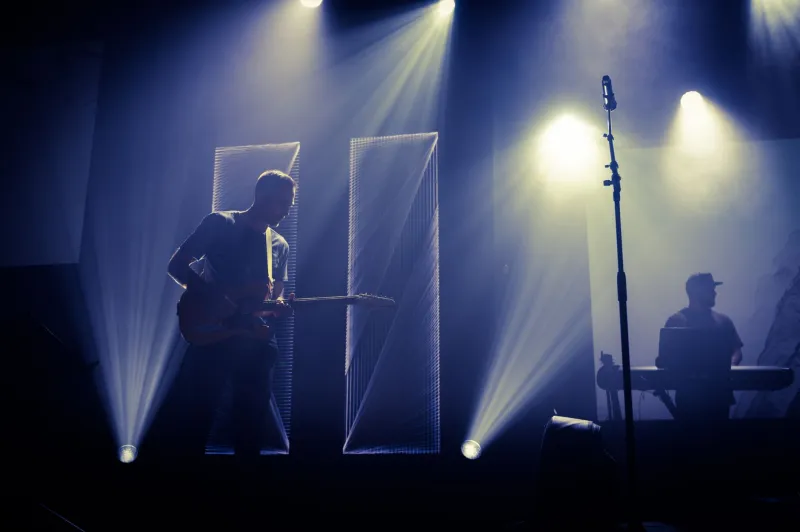
Photo by Photo by Erik Mclean on Unsplash on Unsplash
Somewhere between soundcheck and showtime, a phone lights up in a parking lot. A grainy Instagram Story flickers for fifteen seconds — a handwritten paper, a marker-scrawled song title, maybe a thumbnail of a whiteboard propped against a road case. It's gone before most people even register what they saw. But for a certain corner of the jam band universe, those fifteen seconds are worth real money.
Welcome to the setlist leak economy. It's messy, it's obsessive, and it's more organized than you'd think.
How It Started and Why It Stuck
Setlist speculation isn't new. Fans have been swapping guesses about what a band might play since the days of trading cassette tapes through the mail. But Instagram Stories, Discord servers, and a handful of dedicated fan forums have turned casual curiosity into something closer to a futures market. The information moves faster now, and the stakes — at least for some people — have gotten surprisingly high.
The basic mechanics are simple. Someone with access to the venue, the crew, or occasionally the band itself catches a glimpse of the night's planned songs. They post it, screenshot it, or whisper it into a group chat. Within minutes, that information is pinging across half a dozen platforms. By the time the opener hits the stage, a few hundred people in the lot already think they know what's coming.
The problem, of course, is that jam bands change their setlists constantly. What was written down at four in the afternoon might be completely different by eight. Which means the leaked information is sometimes accurate, sometimes stale, and occasionally just flat-out fabricated.
The Betting Pools Nobody's Talking About Publicly
Ask around in the right tailgate circles and you'll find small-scale betting pools built entirely around setlist predictions. Entry fees range from a few dollars to more elaborate arrangements involving merch trades, ticket hookups, or cash apps. The person who correctly calls the opener and a second-set centerpiece takes the pot. It sounds casual until you realize some of these pools are pulling in a couple hundred bucks a night across a run of shows.
One regular on the Midwest touring circuit — who asked to stay anonymous, which tells you something — described it plainly: "It started as a joke between six of us. Then other people wanted in. Now there's a spreadsheet."
Nobody is calling this organized gambling. It occupies a weird gray area, the kind of thing that exists because it's too small to attract attention and too fun to stop.
When Leaked Info Drives Real Decisions
Here's where things get genuinely interesting, and a little complicated. For hardcore fans following a band across multiple nights of a run, leaked setlists aren't just fun gossip — they're logistical inputs. If word gets out that a band is planning to pull out a rarely-played deep cut on night three of a four-night stand, people will reroute. Last-minute hotel bookings spike. Resale ticket prices for that specific night climb. Fans who were planning to skip a date suddenly reconsider.
A promoter in the Southeast who works regional theater runs confirmed she's noticed the pattern. "You can sometimes see a bump in walk-up ticket sales on a night when something is circulating online," she said. "I don't know if that's good or bad for us, honestly. More butts in seats is more butts in seats."
The resale angle is trickier. When a leaked setlist suggests a particularly coveted night — a full album play, a special guest rumor, a rare song that hasn't been touched in years — secondary market prices respond. Fans who got in early on floor tickets suddenly find themselves sitting on something valuable, and some of them sell. Whether the leaked info is accurate doesn't matter much at that point. The perception is enough to move the market.
What the Bands Actually Think
Opinions inside the touring world are genuinely split, which is maybe the most honest thing about this whole situation.
Some musicians don't care at all. If anything, they find it flattering that people are paying close enough attention to care what song opens the second set. A guitarist from a touring act based out of Colorado put it this way: "If someone's so invested that they're literally gambling on our setlist, that means they love the music. I'm not going to be mad at that."
Others are more cautious. The value of a jam band show — the thing that keeps people coming back night after night across a run — is the sense of discovery. You don't know what you're going to get. That uncertainty is the whole point. When leaked information starts shaping expectations before the house lights even dim, it chips away at something fundamental.
"We've started being more deliberately unpredictable," one road manager mentioned, half-joking. "Not because of the leaks specifically, but it's definitely in the back of everyone's mind."
The Fabricators and the True Believers
There's a whole separate layer to this worth acknowledging: the people who post fake setlists for the chaos of it. Sometimes it's a prank. Sometimes it's an attempt to manipulate the resale market. Sometimes it's just someone who got bored in the parking lot and wanted to watch things unfold.
Fan communities have gotten pretty good at sniffing out fakes — cross-referencing with known sources, checking account histories, looking for inconsistencies in the handwriting or formatting. There's an informal vetting process that happens in real time across group chats. It doesn't always work, but it's surprisingly sophisticated for something that exists entirely outside any official structure.
The true believers, the ones who have been following a band for years and have internalized the patterns of how they sequence a show, can sometimes spot a fake faster than they can explain how. Pattern recognition built over hundreds of shows.
So Is This Actually a Problem?
Depends who you ask, and probably depends on the night.
For the most casual fan, none of this registers. They bought a ticket, they're going to have a great time, and they have no idea any of this subculture exists. For the superfan deep in a Discord thread at 6 PM trying to triangulate whether the leaked setlist is real, it's become part of the ritual — another layer of engagement with something they already love.
The live experience itself hasn't been ruined. Shows are still shows. Bands still go off-script. The music still does what the music does. But somewhere in the parking lot, before the first chord rings out, a small economy is running on rumor and hope and the faint possibility that someone's phone caught something real.
The jam jar is open. Everyone's trying to get a taste before it hits the table.