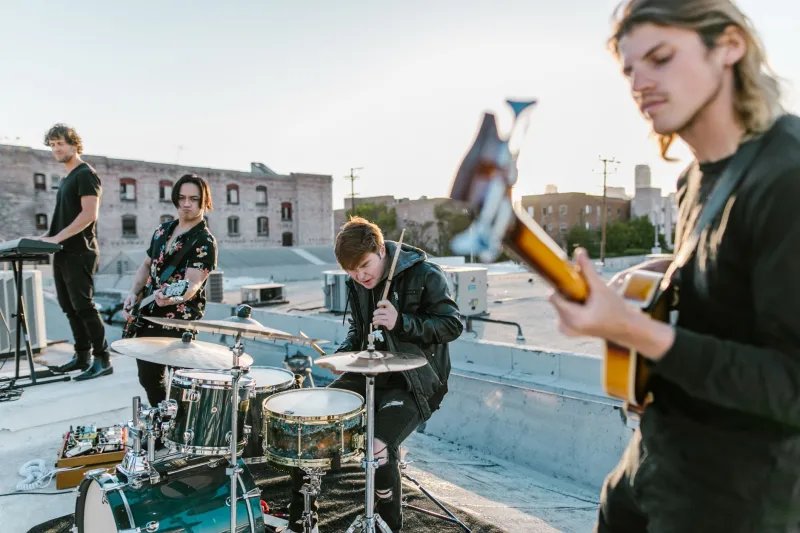
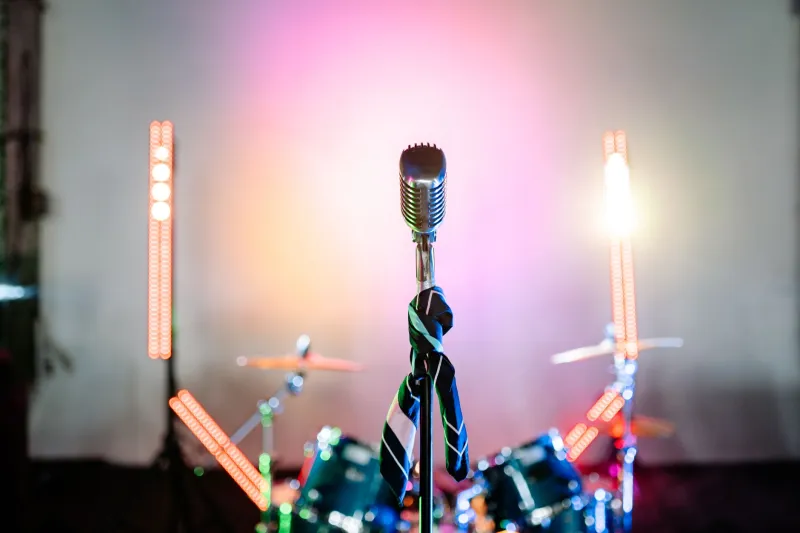
The Twenty-Five Minute Handshake: Opening a Jam Show in a Room That Came for Somebody Else
Photo: U.S. Air Force photo by Airman 1st Class Christopher Campbell, Public domain, via Wikimedia Commons
At 7:30 p.m., the room is half full and fully distracted. The headliner's backdrop is already hanging. The bar line is longer than the crowd. A support band is checking a guitar while a cluster of fans near the rail discusses which songs might get played later. Nobody is booing. Nobody is watching, either.
Opening for a jam band is a strange assignment. You are not the main event. You are the handshake before the conversation. You have twenty-five or thirty minutes, a stage you do not own, and an audience that came for somebody else. The job is not to win everyone over. It is to make a few people look up.
The Room Is Not Yours Yet
Jam audiences are not automatically hostile to openers. They are, however, deeply loyal and often mid-conversation. Many of them have seen the headliner dozens of times. They have a plan for the night: find friends, get a spot, maybe grab a poster, settle in. The opener is an interruption to that plan.
The worst mistake is to treat that distraction as disrespect. A cold room is not a verdict. It is a room with its own agenda. The bands that do well in the support slot tend to read the room honestly. They do not demand attention. They earn it in small increments: a good groove, a clear vocal, a moment that makes someone turn their head.
Short Set, Sharp Choices
Thirty minutes is not a shorter version of a headline set. It is a different form. There is no time for a slow build that pays off in twenty minutes. There is no time for a rambling intro. There is barely time for a tuning break.
Experienced openers make choices fast. They open with something that states the band's identity in the first thirty seconds. They keep the set tight. They may stretch one song, but they do not stretch every song. They watch the clock. They thank the headliner without groveling. They do not play a cover just because it might win the room, unless the cover actually fits who they are.
The setlist is a message. It says: this is what we do. If the room only remembers one thing, make it the right thing.
Sound Constraints and Stage Geography
The support slot comes with invisible rules. The headliner's gear is usually already onstage. The opener may be using a smaller rig, a shared drum kit, or a monitor mix that was built for someone else. The lights might be basic. The sound check might be a line check at 5:45 p.m.
You learn to be a good guest. Do not move the headliner's pedals. Do not unplug the wrong cable. Do not assume the monitor engineer knows your name. Bring gaffer tape. Bring a setlist you can read in low light. Be nice to the crew, because the crew is the only group in the building who can make your twenty-five minutes easier or harder.
The stage itself can be a trap. If the headliner's drum riser is upstage and the sightlines are tight, the opener has to work in a smaller pocket of space. That can be a gift. It forces economy. You cannot hide behind a huge light show. You have to play.
The Small Wins
The support slot is not measured by a standing ovation. It is measured by smaller things. A few heads turning. A pocket of people nodding. Someone at the merch table asking where the band is from. A fan who came for the headliner but mentions the opener on the way out. A promoter who says, send me a link.
Those are the real reviews. An opener can lose a room by pretending it is already won. It can also win a room by being genuinely good and genuinely humble. The two are not opposites. Confidence onstage and respect for the audience can coexist.
What Jam Audiences Actually Reward
Jam crowds reward authenticity, but they also reward craft. They can tell when a band is faking a jam or rushing a groove. They can tell when a vocalist is going through the motions. They may not know your songs, but they know when something is happening.
That is the opening act's advantage. You do not have to compete with the headliner's history. You have to offer a clear, honest first impression. Play the song that sounds most like you. Keep the between-song banter short. Thank the room once, not five times. Do not complain about the sound. Do not bad-mouth the headliner. Do not act like you are owed a bigger crowd.
The Long Game
Every headliner was once an opener. Every packed room was once a half-empty one. The bands that move from the support slot to the main event usually do it by treating the opening gig as real work, not a humiliating audition. They build a mailing list. They meet the local promoter. They learn the venue's quirks. They leave a good impression with the crew.
The twenty-five minute handshake is not glamorous. It is a handshake nonetheless. Somewhere in that distracted room, a few people are listening. The job is to give them a reason to remember.