Before the Crowd Walks In: The Secret Life of a Jam Band Sound Check
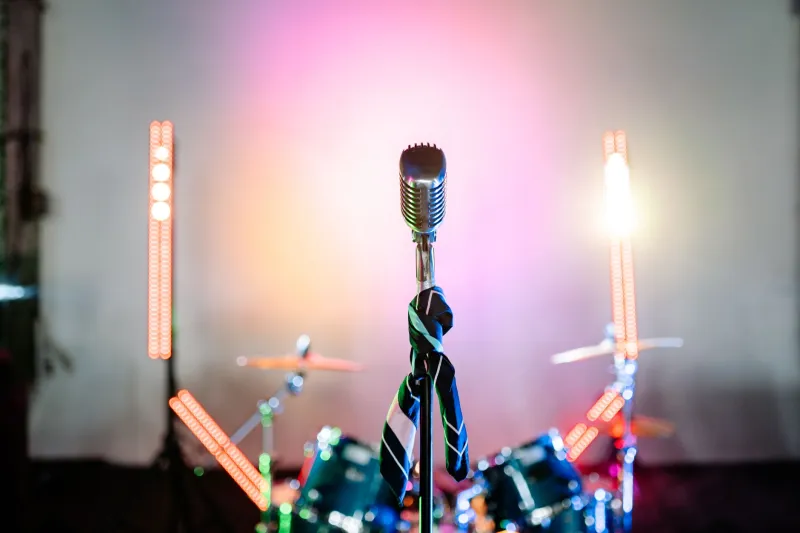
The room is empty. A single work light throws a pale circle over the stage. Someone's tapping a kick drum — not a groove, just a check — and a sound engineer is standing forty feet back with his head tilted like he's listening for something the rest of us can't hear. This is the part of the night that most people never see, and for a jam band, it might be the most important hour of the whole run.
Sound check doesn't get a lot of press. It's not the encore, it's not the jam that breaks open at midnight, and it doesn't end up in the highlight reels. But spend enough time around touring musicians and you start to realize: what happens before the doors swing open shapes everything that comes after.
The Room Is the First Instrument
Every venue has its own acoustic personality, and jam bands — more than almost any other genre — have to reckon with that reality. A six-piece with horns, keys, and two guitarists is sending a lot of sound into a room that might be a converted warehouse in Asheville, a low-ceilinged bar in Columbus, or an outdoor pavilion somewhere in the Texas Hill Country. Each of those spaces pushes back differently.
During sound check, the band and the engineer are essentially interviewing the room. Where does the low end pile up? Is there a flutter echo off the back wall? Does the stage monitor situation let the bassist hear herself clearly enough to lock in with the drummer? These aren't abstract questions — they have direct consequences for whether the night feels tight or like everyone's playing in separate sonic bubbles.
For jam bands specifically, the monitor mix is everything. When you're improvising, you're listening as much as you're playing. If a keyboard player can't hear the guitarist shift into a new key, the conversation breaks down. Sound check is where the band negotiates those listening conditions, and a good front-of-house engineer earns their keep by anticipating those needs before the first song even starts.
Half-Songs and Hidden Experiments
Here's something that doesn't get talked about enough: sound check is often where new ideas get their first public airing, even if the public isn't technically there yet.
Bands will drop into a riff they've been working on in the van, play it out for thirty seconds, then stop and look at each other. Sometimes a drummer will try a different feel on a song that's been in the rotation for two years. Sometimes a vocalist will test a key change she's been thinking about since Pittsburgh. None of it is announced. None of it is labeled. It just happens, quietly, in front of a handful of crew members and the occasional early-arriving superfan who sweet-talked their way into the room.
Those fans, by the way, are witnessing something genuinely rare. The sound check performance and the actual show are almost never the same. The energy is different — looser, more exploratory, sometimes more honest. There's no pressure. Nobody's filming. The band is thinking out loud, and if you're lucky enough to be in the room, you're getting a backstage pass to their creative process in real time.
The Engineer as Translator
A great sound engineer isn't just twisting knobs. They're translating what the band hears on stage into what the audience experiences in the room, and during sound check, that translation process is a full-on conversation.
You'll see it happen: a guitarist plays a chord, shakes his head, and makes a subtle gesture. The engineer makes an adjustment. The guitarist plays it again, nods. That exchange might happen fifteen times in ten minutes, and it rarely involves more than a few words. It's a working language built out of repetition and trust, and bands that have been touring with the same engineer for a few years develop a kind of shorthand that's almost telepathic.
For jam bands, that relationship takes on extra weight. Because the setlist is fluid and the arrangements can stretch or collapse depending on how the room feels, the engineer needs to be ready to respond in real time. Sound check is where they calibrate not just the gear but their own instincts about what the band is going to need when things get weird at 11 p.m. and somebody decides to take a song somewhere it's never been.
Superstition and Setlist Smoke Signals
Ask enough touring musicians about sound check and you'll start hearing something unexpected: a lot of them are superstitious about it. Not in a dramatic way, but in the quiet, habitual way that people are superstitious about anything they care about.
Some bands won't play a song during sound check that they're planning to open with. Others treat it as an omen — if something clicks during check, it goes in the set. If a song falls apart, it gets shelved for the night. One touring keyboardist once told me she could always tell how a show was going to go by how the piano felt during check. "If it sings right away," she said, "we're going to have a good night."
There's no science to any of this, obviously. But there's something real underneath it. Sound check puts the band in a particular headspace, and the emotional temperature of that hour often carries into the performance. A loose, playful check tends to produce a loose, playful show. A tense check — bad monitor mix, gear problems, interpersonal friction — can cast a shadow that lasts all night.
What Early Arrival Actually Gets You
The jam band community has always had a culture of arriving early, and it's not just about getting a good spot at the rail. Experienced fans know that the hour before doors is its own kind of event.
You might catch a full run-through of a song that never makes the actual set. You might hear a cover that gets quietly abandoned. You might watch a drummer and a bassist work out a rhythmic idea that shows up later in a twenty-minute second-set jam, and if you were there for the sound check, you'll recognize the seed of it when it blooms. That's a different kind of listening — more connected, more informed — and it changes the experience of the show itself.
It's one of those things that doesn't translate to a recording or a stream. You have to be in the room, in the quiet, before the energy of the crowd changes everything.
The Ritual Underneath the Routine
At its core, sound check is about preparation — but not in the buttoned-up, rehearsal-hall sense. For a jam band, it's more like a warm-up ritual, a way of inhabiting the space before the night makes its demands. The technical stuff matters, sure. But so does the act of playing together in an empty room, finding the groove before the stakes go up, and reminding each other — without saying it out loud — that they know how to do this.
The crowd arrives, the lights go down, and the first note hits. But the show started hours earlier, in the quiet, when nobody was watching. That's where jam bands do some of their most honest work.