Two A.M. Headlights and a Setlist in Your Head: The Post-Show Drive as Ritual
Photo: M.O. Stevens, CC BY-SA 3.0, via Wikimedia Commons
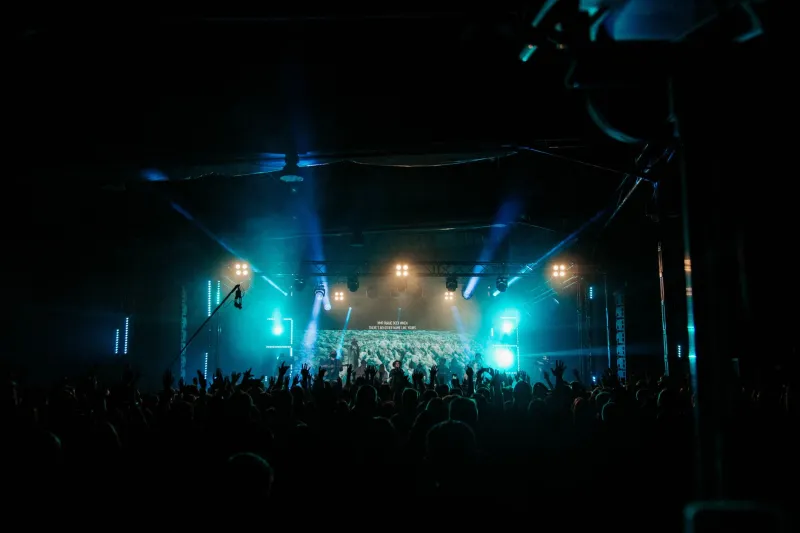
The last note hangs in the air, the house lights come up, and the crowd starts the slow shuffle toward the exits. An hour later, the parking lot is a grid of red taillights. Two hours later, the interstate is a dark ribbon with a few dozen cars moving in loose formation. The show is over. The drive is not.
The First Twenty Minutes Are Chaos
Nobody leaves a jam show quickly. The lot exit is its own traffic system, with pedestrians cutting between cars, staff waving flashlights, and a guy in a van who has decided that the shoulder is a lane. The smart move is to accept the delay. Start the car, let it idle, and let the crowd thin out. Trying to win the exit race usually means sitting in the same line with more brake lights and less patience.
This is also the window for the first debrief. Someone is already pulling up the setlist on their phone. Someone else is arguing about whether the second jam in the middle of the second set was better than the version from three nights ago. The passenger is the DJ now. The driver is the designated adult. Those roles matter more than anyone wants to admit at 11:45 p.m.
The Convoy Is a Temporary Family
On longer runs, the post-show drive becomes a convoy. Friends who came from different cities find each other at a predetermined meetup spot, usually a gas station just far enough from the venue to avoid the worst of the exit traffic. Coolers get reorganized. Coffee gets purchased. Someone checks the tire pressure because someone always checks the tire pressure.
The convoy is not just a safety measure, though it helps. It is a rolling extension of the lot scene. Group chats ping with rest-stop updates. A car pulls off for gas and the others slow down. The conversation moves from the show to the drive to the next show to the strange, comfortable silence that settles in when everyone is tired and nobody needs to fill the air.
There is a practical side to this too. A convoy can share driving duties if someone gets too tired. It can spot a car with a problem. It can make a dark highway feel less lonely. But it also comes with a rule: the convoy goes at the speed of the least experienced driver, not the most impatient one. Nobody needs to prove anything at 2 a.m.
The Setlist Debates Start Before the Highway
The post-show drive is where the night gets processed. The setlist runs in your head like a tape. You replay the transition into the jam that surprised everyone. You try to remember whether that was a tease or a full song. You argue about the encore. You wonder if the band knew how good that second set was.
This is the part of jam culture that does not fit on a poster. The show is a shared experience, but the drive home is where it becomes a personal one. The music is still there, but now it is mixed with headlights, highway signs, and the low hum of the engine. The drive gives the night room to settle. It is not just transportation. It is the decompression chamber.
Fatigue Is the One Encore You Do Not Want
Here is the less romantic part: late-night driving after a long show is a real safety risk. Fatigue sneaks up on you. The music gets quieter. The road gets hypnotic. You think you are fine because you are still awake, but awake is not the same as alert.
The basics matter. If you are drowsy, pull over. A twenty-minute nap in a well-lit rest area is not a failure. It is a decision that keeps you and everyone else on the road alive. Rotate drivers if you have a willing passenger. Do not rely on caffeine as a substitute for sleep. Do not chase a sunrise show on no rest just because the schedule looks cool on paper. And if the drive is long enough, a cheap hotel room is not a luxury. It is part of the trip budget.
Why We Keep Driving
And yet, the drive home remains part of the ritual. The show ends, the lot empties, and the night keeps going for a few more hours. The highway is quiet. The coffee is bad. The setlist is still playing in your head. You are tired, but you are also awake in a way that feels different from the rest of the week.
Maybe that is why jam fans talk about the drive as much as the show. It is the last shared hour of the night, even when you are alone in the car. It is the space between the crowd and the rest of your life. The encore is over. The road is still open. The music is still there.