When the Song Choice Breaks the Room: Reading a Jam Band's Soul Through the Unexpected
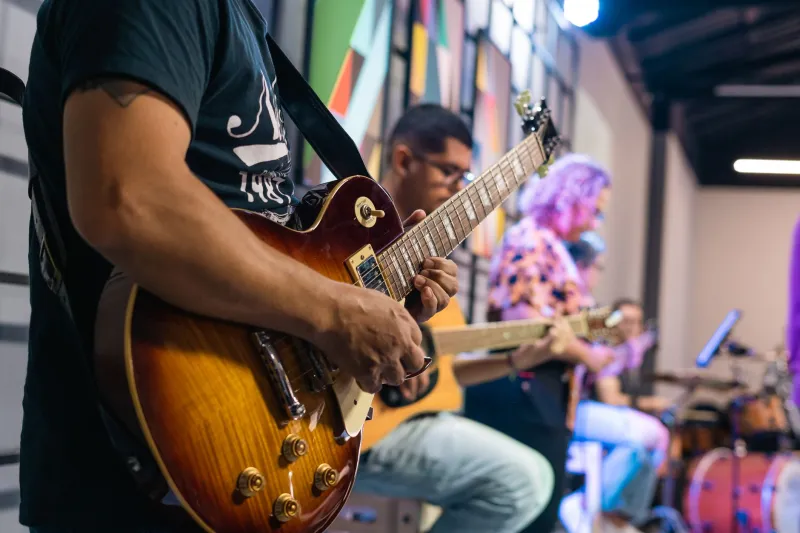
There's a guy named Terrence who's followed the same jam band across seventeen states over the past four years. He doesn't have a backstage pass. He's never done an interview. But ask him what was really going on with the band during their rough winter run through the Midwest in 2022, and he'll tell you — song by song, night by night — exactly where the cracks were forming.
"They opened three consecutive shows with the same slow, almost dirge-like number," he says, leaning against the rail outside a venue in Asheville. "That song hadn't been played in two years. Then suddenly it's the opener, three nights running, in towns where nobody knew each other. That's not a coincidence. That's somebody in that band saying something they can't say out loud."
Terrence is part of a loose, informal community of dedicated listeners who've developed something close to a second language — one written entirely in song choices, deep cuts, and the occasional gut-punch of a cover version nobody expected. In the world of jam music, where setlists are fluid and improvisation is gospel, what gets played and when it gets played often tells a more honest story than any interview ever could.
The Unspoken Vocabulary of the Surprise Choice
Jam bands operate differently from most touring acts. There's no locked-in production setlist handed to the lighting crew three days in advance. Instead, there's a conversation — sometimes spoken, sometimes gestured, sometimes just felt — that happens in the moments before a show and in the live space between songs. That fluidity is the whole point. But it also means that when something unexpected surfaces, it carries weight.
Sound engineer Dana Pruitt, who's spent over a decade mixing for touring acts across the Southeast and mid-Atlantic circuit, has a front-row seat to these moments in a way audiences rarely consider.
"I've been behind the board when a band completely abandons what they were warming up in soundcheck," she says. "You spend an hour dialing in levels for a particular set of songs and then the first chord hits and it's something totally different. Sometimes that's spontaneous joy. Sometimes that's a band working something out. You can tell the difference by the end of the first verse."
Pruitt describes a night in Richmond where a band she was touring with opened with an obscure original that hadn't appeared in a setlist in nearly three years. "The guitar player had just lost his father. Nobody announced it. Nobody said a word. But that song — it was his dad's favorite. The whole room felt it even if they didn't know why. That's the thing about this music. The emotion travels even when the context doesn't."
Crisis, Catharsis, and the Deep Cut
Not every unexpected choice signals grief. Sometimes it signals friction. Musicians who've spent months in close quarters — sharing vans, splitting door money, negotiating creative space — develop their own internal pressure systems. And those systems occasionally vent through the setlist.
Marcus Webb, a guitarist who spent five years with a touring quartet out of Colorado before eventually stepping back to focus on studio work, is candid about how band tension used to manifest in song selection.
"There were nights when we were barely speaking to each other offstage," he admits. "And you could hear it. We'd reach for songs that were harder, more dissonant, stuff with less resolution. Not consciously, maybe. But we were all feeling the same thing and the music reflected it. If you knew our catalog, you'd know something was wrong."
He pauses. "And then there were nights when we'd been fighting for three days straight and somebody called an audible mid-show and pulled out this old song we used to close with back when we were first starting out. Everybody locked in immediately. It was like a reset button. By the end of that song we'd remembered why we were doing this. The audience had no idea. But we did."
These moments — what some musicians call "signal songs" — are the ones superfans have learned to track. There are online communities dedicated to setlist analysis where enthusiasts compare night-to-night choices, flagging anomalies and theorizing about what they mean. It's part musicology, part fan fiction, part genuine emotional archaeology.
Breakthrough Nights and What They Sound Like
If crisis has a sound in jam music, so does breakthrough. Veterans of the touring circuit describe a particular quality to the nights when something shifts in a genuinely positive direction — a creative door opens, a lineup solidifies, a band finds a new gear they didn't know they had.
"You can usually pinpoint the exact moment a band leveled up," says longtime concertgoer and music blogger Simone Achebe, who writes about the jam scene from her base in Chicago. "And it almost always involves them playing something that surprises even themselves. A cover they've never attempted live, or a song they wrote years ago that suddenly sounds completely different because they've grown into it."
She references a show she attended in Bloomington, Indiana, where a band mid-tour pulled out a cover of a classic folk song that had zero precedent in their catalog. "The crowd didn't know what to do for about thirty seconds. Then the band just went for it — took it somewhere completely their own — and the whole room kind of exhaled together. After that, the rest of the tour had a different energy. You could read it in every setlist that followed."
Learning to Listen Between the Lines
What makes this kind of reading possible is the intimacy that jam culture builds over time. Unlike arena acts where the performance is sealed and polished, jam bands invite audiences into something ongoing. The show isn't a product delivered. It's a process witnessed.
That openness creates a particular kind of trust — and a particular kind of transparency, even when it's unintentional. A band navigating internal change, personal loss, creative reinvention, or simple road exhaustion will inevitably let some of that show. The setlist becomes a kind of confession, not because the musicians are necessarily trying to say something, but because music is the most honest language they have.
Terrence, back outside the Asheville venue, puts it simply. "These bands are out here living their lives in public. They're tired and they're inspired and they're grieving and they're falling in love and they're falling apart — all of it, on the road, in front of strangers. And the music carries all of that whether they want it to or not."
He watches the doors open and the crowd start to file in. "Tonight they're opening with something I haven't heard them play in a long time. Something that usually means they're feeling good. So I'm feeling good."
He heads inside. The lights drop. The first chord lands.
He was right.