What the Songs Aren't Saying: Decoding a Band's Headspace Through Their Setlists
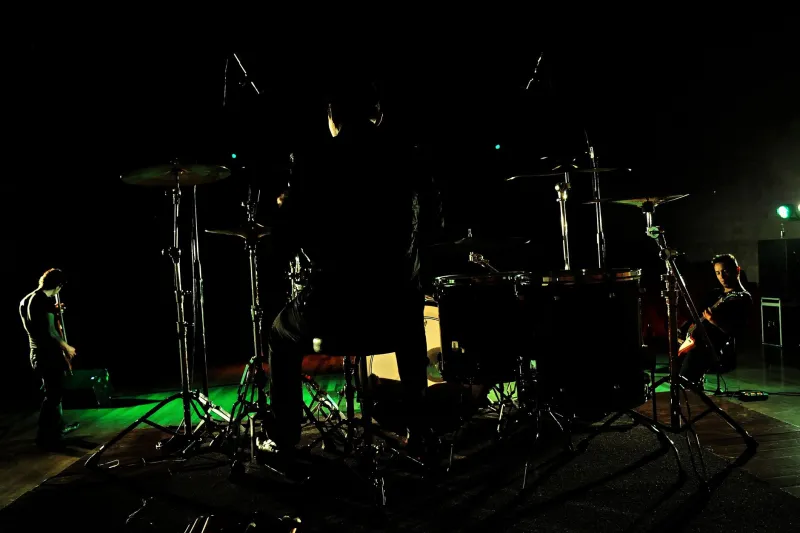
There's a particular kind of fan who shows up to a three-night run with a notebook. Not to write down the setlist as it happens—plenty of apps handle that now—but to compare. Night one against night two. Night two against night three. They're looking for something the band probably didn't intend to broadcast, and yet broadcasts anyway, every single time.
Setlists are documents. They're also confessions.
For anyone who's spent serious time following jam bands through the grind of a full tour cycle, the pattern becomes almost readable. Not perfectly, not like cracking a code, but close enough that you start to feel the band's internal weather shifting before anyone on stage says a word about it.
The First Sign: What Gets Dropped
Every band has its anchors—songs that have been in rotation so long they feel structural, like load-bearing walls in a house. When one of those disappears mid-tour, the fans notice immediately. The question is whether the band intended them to.
Sometimes a song gets dropped because it's genuinely worn out. After playing the same composition forty times in eight weeks, even the most beloved jam vehicle can start to feel like a chore. The musicians stop finding new corners in it. The improvisation gets a little predictable. The song gets quietly benched.
But sometimes a song disappears because something happened. A lyric hits differently after an argument. A melody becomes associated with a moment on the road nobody wants to revisit. One musician in a band that toured heavily through the Midwest a few years back described it bluntly: "We stopped playing that song because every time we played it, it reminded us of a night in Columbus that we all wanted to forget. Nobody said that out loud. We just... stopped."
The absence of a song is its own kind of statement.
Energy Management and What It Reveals
Where a band places certain songs in a set is almost as telling as whether they play them at all. A band that's feeling strong and confident tends to hold its heaviest hitters for the second set, trusting themselves to build toward something. A band that's running on fumes often front-loads. They lead with the big guns because they're not entirely sure what they'll have left by the end of the night.
This isn't a criticism—it's survival. Touring is brutal in ways that don't make the highlight reels. Six weeks in, after bad sleep and worse food and a van that's making a sound nobody can identify, you play differently. The setlist reflects that.
Seasoned observers also watch for what happens in the transitions. In a healthy, loose band, the segues feel exploratory. They'll drift from one song into something unexpected, almost like a conversation that wanders into interesting territory. When a band is stressed or disconnected from each other, the transitions tighten up. They get cleaner, safer, more deliberate. Which sounds like a compliment but often isn't. It means the musicians are playing it close to the vest, not trusting the open air between songs.
Recurring Patterns as Internal Barometer
Look at a band's setlists across a full tour and patterns emerge that no individual night would reveal. Maybe they keep returning to the same song in the same slot—not as a planned anchor, but almost compulsively. That kind of repetition usually means something: the song is working in a way that's feeding them, or it's become a comfort mechanism, a known quantity in a stretch of nights that have felt unpredictable.
Conversely, a band that's genuinely clicking creatively will often do the opposite. They'll avoid repeating themselves almost aggressively. They'll dig into the catalog for songs that haven't been played in years. They'll take risks with segues. The setlist starts to look almost chaotic from the outside, but it's actually a sign of confidence—they trust each other enough to go somewhere new every night.
One tour manager who's worked with multiple jam acts described it this way: "You can tell within the first song of the second set whether it's going to be a good night. Not because of the song itself, but because of how they go into it. Are they looking at each other? Are they leaning in? Or are they just playing?"
When a Breakthrough Shows Up
Creative breakthroughs on tour are real things, and they tend to announce themselves in the setlist before anyone says anything publicly. A band that's been grinding through a difficult stretch will sometimes hit a night—often for no obvious external reason—where everything opens up. The jams run longer. They revisit songs they'd abandoned weeks earlier. They'll drop a rarity that nobody's heard in years, and they'll play it like they just rediscovered it.
Those nights are the ones that live in recordings forever. The ones that get traded and re-listened to and dissected on forums. And if you go back and look at the setlists from the nights surrounding that breakthrough, you can often see the pressure building. The setlists get a little shorter. The safe songs appear more frequently. And then something breaks loose.
Reading the Room They're In
It's worth noting that setlists don't exist in a vacuum. A band playing a festival slot reads differently than the same band headlining a club. Hometown shows carry their own emotional weight. Late-tour dates in markets that have always been tough for them will sometimes show a kind of defensive setlist architecture—the songs they know will land, arranged to minimize risk.
But the most revealing nights are usually the ones in the middle of nowhere, on a Tuesday, in a room that's three-quarters full. No hometown pressure, no festival optics, no industry eyes. Just the band and whoever showed up. Those sets are often the most honest documents a touring act produces.
If you want to understand where a band actually is—mentally, creatively, emotionally—forget the press releases. Pull up the setlists from week four of the tour, from the markets nobody writes about, and start reading between the songs.
The story's always there. You just have to know what you're looking for.