Beyond the Door Split: The Real Ways Touring Jam Bands Keep the Lights On
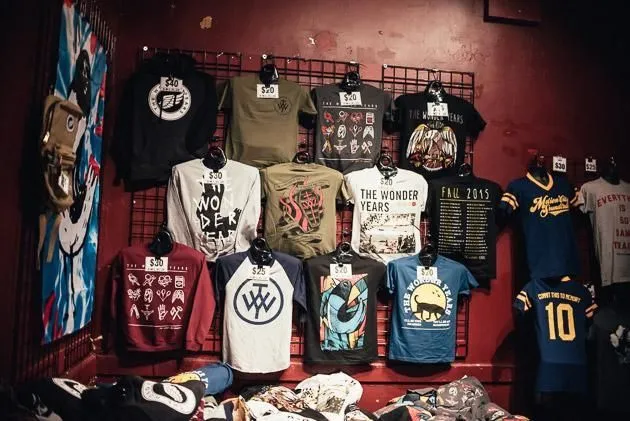
Photo: band merch table concert venue fans buying t-shirts live music, via i.pinimg.com
Ask a touring musician how they make money and you'll usually get a deflection. A laugh. A shrug that carries about fifteen years of complicated math inside it. Press a little harder and the real picture starts to emerge — one that has almost nothing to do with ticket sales and everything to do with a patchwork of revenue streams that would make a freelance consultant dizzy.
The romanticized version of touring — band plays show, band gets paid, band drives to next city — hasn't been economically viable for most independent acts since before streaming gutted the music industry's last stable income floor. What replaced it is messier, more creative, and honestly more interesting.
The Merch Table Is the Business
Every working musician will tell you the same thing: the merch table is where the actual money lives. Not streaming. Not ticket splits. The table by the door with the t-shirts and the stickers and the vinyl and the hand-stamped posters.
But not all merch is created equal, and the bands that actually move product have thought carefully about what they're putting out there. A $30 t-shirt with a forgettable logo is a hard sell. A $28 shirt with a design that references an inside joke from the band's mythology — a lyric, a running bit from stage banter, a visual that fans of three-plus years will immediately recognize — that sells itself.
"We stopped doing generic band tees and started making stuff that only our people would get," says the guitarist for a jam band based out of Athens, Georgia that's been touring regionally for four years. "Our sell-through rate basically doubled. People want to wear something that signals membership in something specific."
Pricing psychology matters too. Bands that offer a lower-priced entry item — a sticker pack, a button, a download card — capture the fans who are broke but enthusiastic. Those same fans often come back to the table at the end of the night for the shirt after they've had a few drinks and enjoyed the show. It's not manipulation. It's just understanding how people make decisions in the moment.
Vinyl has made a genuine comeback as a merch item, particularly for the jam scene's older demographic. A limited pressing of 300 records, hand-numbered, sold exclusively at shows, creates scarcity and urgency that a digital release can't replicate. The upfront production cost is real, but the margin on a $30 record is substantially better than on most other merch categories.
Splitting the Difference with Venues
The traditional door deal — venue keeps a percentage, band gets the rest — is increasingly just one option among several. Savvier touring acts negotiate arrangements that better reflect the actual value they bring to a room.
Guarantee-plus-percentage deals are common for bands with a proven draw. The venue pays a flat guarantee regardless of attendance, plus a percentage of door revenue above a certain threshold. This protects the band on a slow Tuesday in a mid-size market while still giving the venue upside if the show blows up.
But the negotiation doesn't stop at the door. Bar guarantees — where the band receives a percentage of bar sales during their set — are increasingly standard for acts that drive drinking. Jam bands, with their longer sets and audience participation culture, tend to be good for bar numbers. That's leverage, and the bands that know how to use it are doing better than those who just accept whatever the talent buyer puts in the initial offer.
Venmo and direct payment apps have changed the cash-flow reality of touring in ways that don't get discussed enough. A band that plays a smaller room with a cash door used to deal with the venue settling up at the end of the night, sometimes with a count that didn't quite match what the band thought they saw come through. Now, real-time tracking and digital payment requests mean less ambiguity and faster access to money that used to sit in someone else's pocket until close.
Streaming: A Floor, Not a Ceiling
Let's be honest about streaming. The per-stream payouts from Spotify and Apple Music are not going to fund a tour. For most independent jam acts, streaming revenue is a rounding error on the overall income picture. But dismissing it entirely misses the point of what streaming actually does for a working band.
Streaming is discovery infrastructure. A potential fan in Portland who hears a band's track on a playlist books a ticket when that band comes through. That one ticket — plus the merch they buy at the show — is worth more than ten thousand streams in raw dollar terms. The bands that understand this use streaming as a marketing channel rather than an income channel, and they stop being frustrated by the payout math.
Bandcamp remains the outlier. The platform's artist-favorable revenue split and its dedicated fan base willing to pay for direct downloads and physical media makes it genuinely useful as a supplemental income source, particularly around tour announcements when existing fans are primed to spend.
The Side Hustle Economy
Between tours, the income picture gets creative fast. Teaching is probably the most common supplemental income source for working musicians — private lessons, workshops, even online instruction through platforms like TakeLessons or Lessonface that let a touring guitarist maintain a student base regardless of where they're physically located.
Session work, for those with the skills and the connections, fills gaps in a way that touring income can't. A keyboardist who can sight-read and play to a click track is employable in ways a touring musician with a narrower skill set isn't. This kind of versatility is increasingly treated as a survival skill rather than a sellout.
Some bands have gotten genuinely inventive. House concerts — ticketed private performances hosted in someone's living room or backyard — have become a meaningful revenue stream for acts with devoted regional followings. The overhead is minimal, the pay-to-attendance ratio is often better than a club show, and the intimacy tends to generate the kind of fan loyalty that translates into long-term support.
Crowdfunding for specific projects — a new record, a van replacement, a regional tour — has a mixed track record, but bands with strong community ties and a history of delivering on promises tend to hit their targets. The key is specificity. "Help us tour" is a hard pitch. "Help us record this album at this studio with this producer and we'll send you a copy before it's released anywhere else" is a transaction people understand.
The Real Math
None of this is glamorous. The invisible economy of a working jam band looks less like a music career and more like running a small business with a van payment, irregular revenue, and a customer base spread across seventeen states.
But the musicians doing it — the ones who've figured out how to layer enough income streams to keep moving — aren't complaining. They're playing music they care about for audiences who show up because they want to be there. The money is a means to an end, and the end is another night on the road, another room full of people, another chance to play something that nobody planned.
That's the economy that doesn't show up in any spreadsheet. And somehow, it keeps working.