Gone Before the Last Gig: The Gear That Didn't Survive the Tour
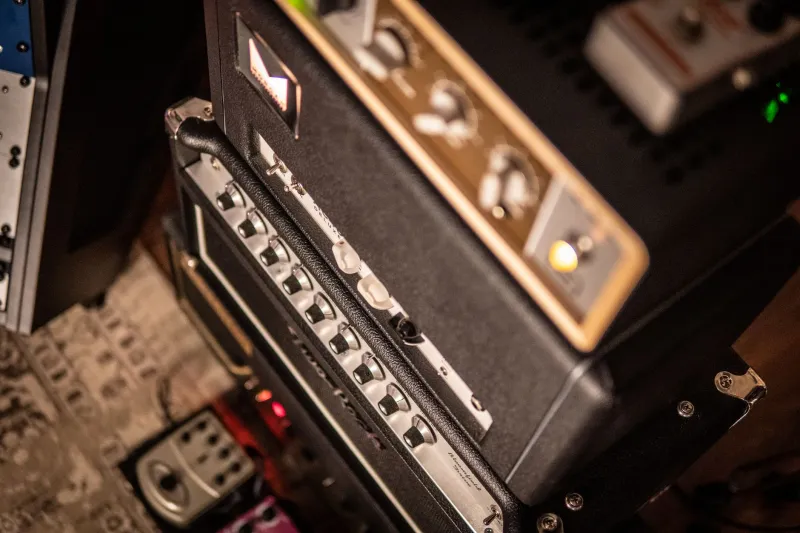
Somewhere in America right now, there is a vintage Fender Twin Reverb sitting in a pawnshop in Tulsa. Its owner — a guitarist from a jam band that was holding it together on a shoestring — sold it for $180 and a tank of gas on a Tuesday afternoon in October. He doesn't regret it. Not exactly. But he still thinks about it.
That amp had a name. A lot of them do.
Talk to enough touring musicians and you start to realize that the road is basically one long conversation between people and the objects they carry. Instruments, pedals, amps, cables, drum hardware — all of it gets hauled across interstates and loaded into venues that smell like old beer and possibility. And all of it is, at some point, vulnerable. To accidents. To bad luck. To the very specific financial desperation that sets in around week three of a tour when the guarantee from a Friday night gig doesn't quite cover the van repair from the Thursday before.
The Pawn Shop as a Tour Stop
For a lot of bands, the local pawnshop isn't a last resort. It's a known stop on the circuit, like a gas station or a Waffle House. When money gets tight — and it almost always gets tight — gear becomes currency.
A bassist from a Colorado-based jam outfit described the mental math that goes into those decisions. "You're looking at your rig and you're thinking: what can I actually replace? What can I borrow? What do I absolutely need to get through the next four shows?" He sold a backup bass in Albuquerque on a tour that was supposed to run through the Southwest. The van's alternator had other plans. "I didn't even love that bass," he said. "But I still looked it up online like a month later just to see if it was still there."
It wasn't.
Accidentally Destroyed and Somehow Still Funny
Not every gear loss is a transaction. Some of it is just chaos.
One drummer — who's been touring in various configurations for the better part of fifteen years — has a running list of things that have been destroyed on the road. A snare drum that got soaked when a van window wouldn't close in a Georgia rainstorm. A hi-hat stand that got wedged under a loading dock door and bent into something that technically still worked but looked like modern sculpture. A floor tom that a sound engineer dropped off a stage in Cincinnati.
"The Cincinnati thing really hurt," he said, laughing in a way that suggested it still kind of does. "That drum was tuned exactly right. I had it dialed in. And then just — gone."
He kept the pieces for a while, carrying the cracked shell in the back of the van like a mascot. Eventually it ended up in a dumpster behind a venue in Knoxville.
The Creative Workaround as Survival Skill
Here's the thing nobody tells you before you start touring: losing gear forces you to get better.
That sounds like the kind of thing someone says to make you feel better about a bad situation, but musicians talk about it with genuine conviction. When you lose a pedal that you've been leaning on for a specific sound, you have to figure out how to get close to that sound another way. When your backup keyboard doesn't survive a load-in incident, you play the set with what's left and you find things in the arrangement you didn't know were there.
A keyboardist from a Midwest-based group lost her Leslie simulator somewhere between St. Louis and Indianapolis — she still isn't sure exactly when or where it fell off the face of the earth. "I was devastated for like twenty minutes," she said. "Then we had a show to play. So I just... played differently." She ended up leaning harder into the organ tones she'd been underusing, and some of the textures she found that night became a permanent part of the band's sound. "I tell people that sometimes the best thing that can happen is something breaks."
Left Behind on Purpose
Some gear doesn't get lost. It gets left.
There's a whole category of intentional abandonment that doesn't get talked about enough. The amp that was always a problem — too heavy, always buzzing, never quite right — that gets conveniently forgotten at a venue in Baton Rouge. The keyboard stand that had been jury-rigged with zip ties and optimism for two years and finally just gave up the ghost in a parking lot in Nevada.
"We left a monitor wedge in a bar in Memphis," one guitarist said, with zero remorse. "It was broken. The bar had a broken one too. We figured they could combine them into one working monitor. I don't know if that's what happened. But that's the story I tell."
There's something almost ritualistic about it — shedding weight, leaving pieces of the journey behind. Road culture has always had that quality, the sense that you travel lighter at the end than you did at the beginning.
What You Actually Need
Every musician who's been through the gear-loss experience eventually lands on some version of the same realization: the tool matters less than the player.
It's not a new idea. But it hits differently when you're standing on a stage in a mid-size room in the middle of nowhere, playing through borrowed equipment with a set to finish and an audience that showed up to hear you — not your rig. "You realize pretty quickly that people aren't there for your pedal chain," said the bassist from Colorado. "They're there for something that doesn't live in the gear."
That doesn't make it hurt less when the Fender Twin ends up in a Tulsa pawnshop. But it does put the whole thing in perspective.
The road takes things. That's always been part of the deal. What you bring back — the adaptability, the stripped-down clarity about what actually matters — that might be worth more than whatever you left behind.
Even if you do still look it up online sometimes, just to see if it's there.